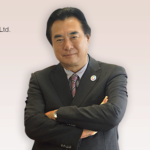
GK spoke with Toshinori Yamanaka, President of Nakanihon Capsule, about Japan’s reputation for quality and the company’s award-winning capsule innovations. Read an excerpt of the interview below.
In terms of Japanese service and its concept of Monozukuri, what is it that gives the country a competitive advantage against other regional competitors?
One unique characteristic of the Japanese is that we are very conscious of performance and appearance, which contributes to the reputation of ‘Made in Japan’ quality. Speaking about capsules specifically, products from Japan are renowned for being easy to swallow, not overly large, and of course, of consistently high quality.
For the formulation of capsules, we can make proposals according to customers’ requirements, or optimize customers’ existing formulations. Specifically, our business does not use intermediaries within the supply chain, which allows us to pass savings on to the consumer and offer lower prices. Currently, we are contracted to manufacture more than 1,800 items per year for domestic and overseas customers, of which more than 300 items per year are newly developed or renewed based on joint ideas between our customers and us.
Given that your company is constantly innovating in response to market trends, how do you approach the complex task of R&D? What new, innovative technologies can we expect from Nakanihon in the near future?
All of our departments play a key role in our business’s growth, from sales to manufacturing. However, R&D plays an especially important role, and as such, we make sure to create a culture where all employees can contribute to innovation. We regularly organize seminars on intellectual property and patents for employees, gaining their advice on important decisions. Our development history is centered on the idea of improving the negative aspects of capsules.
For example, gelatin melts at high temperatures, causing capsule surfaces to stick to each other during storage. ‘Pea-capsule’ was developed to solve this problem, and has been improved by not causing problems even in temperatures as high as 40°C (104°F). Recently, we have also developed a technology to make the capsule film white or opaque without using titanium dioxide. This is in response to the EU ban on the use of titanium dioxide in food products (due to carcinogenic fears).
Could you tell us more about how your company has been working toward sustainability in support of Japan’s SDGs?
We have been looking for ways to reduce waste as much as possible, such as using the gelatin residue from capsule manufacturing to create new products. We found that the gelatine used for soft capsules is rich in nitrogen, which we have then proposed to fertilizer manufacturers for them to use as a fertilizer ingredient. We have already found several clients in this field, and local farms in the area have begun to use fertilizers derived from our waste products. Our recycling rate of gelatin residue, which we previously discarded, exceeded 60% this quarter, and we are continuing our efforts to reach 100% by the end of recent years.