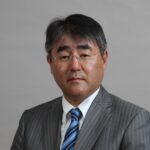
GK spoke with Kenjiro Kohri, Chairperson of Nagoya City University, about the institution’s vision for global partnerships and its role in driving medical and digital innovation.
How are you going to differentiate between universities?
We differentiate universities first from their know-how experience and expertise in medicine, digitalization, and technology; second, the size of the universities. Finally, the role that universities play, the impact, and the difference between the education systems. It is important to know all the different forms of education in Japan.
In Japan, universities are classified into national, public, and private universities: where most private universities are religious-related. It is one of the characteristics of the Japanese education system. There are more than 800 public universities and one of the characteristics of our small class system and also community-driven universities. Public universities are run under the control of the General Affairs Ministry, by the municipal government.
Japanese public universities are slightly different from the state universities in the US; we do not have the support of the Ministry of Education. However, bigger-scale public universities can do the same curriculum as the national university in a big prefecture. Meanwhile, small-scale universities cannot tackle big projects like big universities. If we were to compare the enrollment of the freshman this year to the birth rate last year, there is a 70 percent decrement. The advancement of after graduation moving to higher education rate is about 56 percent or remained the same for the last decade. International students play an important role not only in the university to survival but also in the university continuing its business.
Could you tell us more about the Nagoya City University ‘Future Plan’, and what is your institution’s 3-5 year midterm strategy? As part of this strategy for the future, what is your plan for further international expansion?
We have the mission to pass the baton to the next generation. To achieve that, I believe that it is important to continuously hear the feedback of the next generation on top of personal views in setting up new plans. As the Chairman of Nagoya City University since 2014, I have created 52 goals based on this ‘Future Plan.’ With most of the goals have been accomplished, I have set up the new edition of the ‘Future Plan’ in 2021 with 48 other different goals. 7 out of 8 visions are stating that we would likely continue what we have been doing: while the 8th one is the new vision for the future – the internationalization of this university.
As the concept of internationalization is extremely generic, it covers many areas from the study, among institutions, and also the interaction between human beings and cultural exchange. One of the strengths or characteristics of this university is the collaboration with the Nagoya City Municipality for internationalization. As for now, we are engaged in partnerships with more than 54 international universities. However, we have been trying to pick up 7 out of them to enhance our partnerships more in the next 18 months.
How did the Covid-19 pandemic impact your institution, and what strategies did you implement in response to it? Looking to the future, how will digitalization play a role in your operations?
One key point is for society and corporations to be interested in our university and vice versa. During our establishment in the 1950s, we only had two departments – medicine and pharmaceutics. We struggled because of the shortcoming of the corporation in the business sectors. However, after the launch of other departments such as economics, architecture, and design, as well as bioscience, more companies began to pick up interest in our university. We believe that more corporations will be interested in our university after the launch of the digital science program.
Regarding the situation during the pandemic, just the same as other universities, we have been implementing tele-education where students can have the access to replay the classes. On the contrary, the downfall has been less interaction between students or between human beings, fewer outing-less going out, and fewer going abroad to study. We have been implementing digitalization in our medical courses. Our university hospitals are equipped with more than 22,000 beds, which is quite huge compared to other universities’ hospitals. To analyze big data or develop new medical equipment, we have been depending on digitalization which will be implemented in our fifth hospital by the end of April 2023.
What role do industry partnerships take within your institution, and how are you planning to utilize them further in the future?
For the past 20 years, we have been continuously researching nanoparticle treatments. It has proven to work for animals; however, there is still a long way to figure out how it will affect human beings because of the time, money, or budget consumed. Our researchers will inject the particle into the cells of the animals, especially the cancer cell and it has been proven to warm the body up to 40 degrees. As cancer cells die in high temperatures, we warm the body up to 45 degrees to kill the cancer cells – thermotherapy.
Thermotherapy is commonly used for prostatic cancer, and our ongoing collaboration with the engineering department and the private sector. As for the CT scan, it has proven to be functional since our medical team can get the image of the organs, and analyze the characteristics of those organs. Our collaboration with Siemens for the new CT scan will be ready to be commercialized by next February.
In the last 4 to 5 years, the number of patents coming from our university has been increasing, reflecting our continuous approach toward development. We have received grants from the Ministry of Education for scientific research and we are one of three universities awarded the most grants from them per researcher.