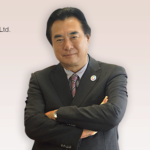
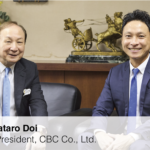
GK sat down with Michihiro Maki, President of Nadaman Co., Ltd., to discuss what makes Japanese food unique and the resilience that has sustained the brand for 190 years.
What unique qualities make the Japanese food industry stand out from its international competitors?
The first characteristic of Japanese cuisine is that Japan is an island country, and there is a lot of distance between the North and South of Japan. Hence, we have a good source of natural materials from the sea and mountains. We also have a lot of rivers and fields. The local food source is very rich and of the best quality.
The second characteristic is that we have a very distinguished four seasons during the year and each season has its own seasonal food and raw materials. This means we can enjoy the variations in seasons leading to diversity in our cuisine.
The third characteristic is that those seasonal materials have a variety of methods for preparation using the soup stock called ‘Dashi’ in Japanese cuisine. We do not use a very rich sauce to overpower the original taste of these materials so that we can fully enhance the quality of the raw materials and allow people to enjoy the taste.
As a result of those three characteristics, Japanese cuisine is regarded as very healthy around the world. The reason for that is, we don’t have much-fried food or animal fat. It’s rare to see an obese person in Japan and Japanese ladies actually have the longest lifespan in the world.
In response to the inbound tourist strategy, do you adjust to maintain foreign pallets or do you maintain the traditional tastes?
Of course, we keep the traditional taste of Japan, but when saying that in reality it actually changes considerably. When we look at very traditional old Japanese cooking and compare it with current cuisine there is a huge difference between them. But we have a saying that, ‘traditional restaurants are always brand new’, because all chefs are requested to brush up on their technology from time to time and try something challenging.
If they keep on doing that, after 10-20 years there will be a great change in their cooking. Because of this, I think our current cuisine is slightly different from traditional Japanese cuisine. But the customers who have experience trying our restaurants overseas do not think there are any irregularities in the Japanese cuisine in our restaurants. However, overseas customers who have only tried ramen, sushi, tempura, and sukiyaki may find it a bit different. Therefore, we invented a special course menu and named it ‘Fujisan course’. In this we provide sushi, tempura, and steak and it is very popular among overseas customers.
Another example of raw material that we traditionally don’t use is that we make a savory egg pudding using foie gras and shark fin, as well as another type of desert using tapioca and coconut milk.
How has your company managed to keep your traditions alive and persevere through so much adversity?
In Japan, there are 7 companies with more than 1000 years of history, 32 with more than 500 years. With 200 years of history, there are 3,146 companies. So we are almost there as we celebrated 190 years. Worldwide, there are 5,586 companies with more than 200 years of history, meaning about two third of those companies are within Japan.
The reason why so many are based in Japan may be that one of the characteristics of the Japanese is patience. There have been so many changes in lifestyle, as well as World Wars and large earthquakes. Each time we faced such an incident we made adjustments so that we could come out on the other side stronger.
Our founder, Mansuke Nadaya was originally from Nagasaki and he later moved to Osaka. He was a chef and did a number of things, such introducing bread to Japanese people, managing a department store, and managing a hotel. He had taken up quite a few challenges. Some of our businesses have closed and now we remain a food-providing company and restaurant owner company. So since then, we have gone through quite a few changes.
One of the first milestones was when we changed our place from a traditional social assembly place for top-end people to a restaurant in a high-end hotel and restaurant in a department store. Our target market was high-end people visiting the hotel and the department store. Around 20 years ago we started a business line called ‘Nadaman Chubo’ which is a food hall at the department store where we sell bento boxes and pre-packaged foods. We started that business from the Mitsukoshi departmental store in Nihonbashi and now we have 44 outlets at most of the famous prestigious stores across Japan.