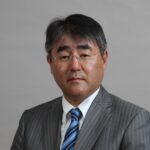
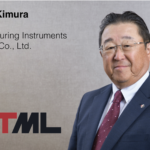
GK spoke with Goji Wada, President of Mutsubishi Rubber Co., Ltd., about the company’s innovations in renewable energy solutions and its century-long expertise in specialized rubber technologies.
How has the increased demand for renewable energy systems impacted your business?
We provide products for the energy field, where decarbonization is a major theme to reduce dependence on fossil fuels. For thermal power plants and other power plants, we are working as a rubber manufacturer to meet the efforts of Japanese companies to reduce CO2, ammonia, and hydrogen from the roadmap for decarbonization.
Regarding the use of LNG, the market is undergoing major changes in the news. Geopolitical risks exist in pipelines, and Europe is considering switching to ship transport. We have therefore developed the world’s only isolation balloon device that enables the safe maintenance of safety valves, and we have begun delivery of this.
For wind power generation, we supply oil seals for main shafts and blades that change the angle of blades and provide special anti-vibration rubber to suppress the vibration of generators and gearboxes both in Japan and overseas.
As a company that is constantly innovating and releasing new products, how do you approach the complex task of R&D? What new, innovative technologies are you looking to introduce in the near future?
Now, the government’s basic plan for national resilience in Japan, where infrastructure development and changes in the natural environment are remarkable. We are developing products that protect people’s lives from Earthquakes, lightning, typhoons, and tsunamis, as well as solving problems with aging infrastructure. Rubber products are required to contain gas and germs, shield against radioactivity, oil and dust seals for bearings of rotating bodies, anti-vibration rubber, and shock absorbers to eliminate equipment problems caused by vibration. Therefore, there are many different types of rubber to suit different applications.
New product development is always based on products that offer benefits to the customers who use them. In order to protect the safety of the workers, we have developed the world’s only special rubber balloon isolation method. ‘Balloon Type II’ isolates between the gas tank and safety valve for LNG ships and FSRU facilities. In the medical field, we also teamed up with JGC Corporation, a plant manufacturer, to replace the only part that could not be automated in the factory, which was to seal the container with a lid and jointly developed the rubber BLAT (Band Less Air Tight). We have created a product that contributed to the complete automation of the factory.
Through open innovation, we will respond to the changing times and do what only Mutsubishi Rubber can do. As a company that creates new social value by combining ideas both inside and outside the company, even if it is joint creation based on trusting relations with larger companies. I would like to strengthen our efforts.
What is it that has allowed your company to gain this reputation, and what is your competitive advantage?
Since we are now celebrating our 100th anniversary, we, therefore, have 100 years of knowledge within this niche field. Our parent company is Victaulic, a British company, that we engaged in a joint venture and technical collaboration alongside other manufacturing companies for water supply applications or mining. In fact, 49% of the capital is from Britain and 51% is from Japan. Victaulic sent us an engineer at the beginning of our history to teach us how to use this specialist rubber technology. This was therefore the base of our technology and the base of our product lines.
Since then for the past 100 years, we have created new technology and products, but this was our base technology mastered from the British industrial revolution. Now, we no longer have collaborations with Victaulic or Britain itself, and we are now a family-owned company, and keep brushing up on our technology and keep brushing up our product expertise all the time.
In 1989, the emergency seal used for the English Channel Eurotunnel excavators was adopted for the first time in Japan. By applying this technology, we have developed a seal for preventing the inflow of groundwater (causing ground subsidence) when a shield excavator starts and arrives. For its superior water stoppage and pressure resistance compared to the other companies’ seals. We believe that these unique products can be used to solve similar problems overseas. We believe that if we develop a good product, that product will have a place in the world.