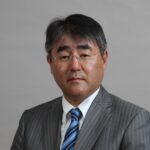
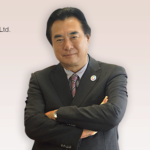
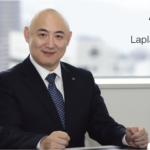
GK sat down with Yuji Matsuo, President of Asukanet Co., Ltd., to explore the limitless applications of ASKA3D technology and the company’s mission to innovate communication for a changing world.
Could you tell us what plans you have for the future of ASKA3D, and what applications do think it has the potential to be used in?
The aerial display has received a lot of attention thanks to the pandemic, and people have envisioned a futuristic society with such technology. I believe that it can be applied to many areas in the city, such as operational elevator panels, payment devices at shops, or signage in the street to market brands. Right now, we are experimenting in some cities in Japan, but maybe within 5-10 years, we’ll see this technology in more areas.
We are working to see what kind of applications are possible with our technology that could be used for hygienic-conscious reasons, such as selling tickets through contactless methods or that can be used for the gaming industry to enrich the gaming experience. It could even be applied in the gaming experience among friends or arcade centers. It will also probably help develop new games for children, where they don’t have to touch things such as consoles. They can adjust play by touching the mid-air. So that could be the new way of enjoying the games in the future. I expect it to be used in casinos as well. Therefore, I believe that the applications of ASKA3D are infinite.
How has your company been supporting businesses looking to digitalize their processes?
私たちのプロセス image processing service is the founding service of the company, especially for the funeral division. We provide services for people to send and receive photos online; a completely online exchange, removing the need to be in person. Of course, an output location is required, and there used to be an offline service, but right now, we’ve moved on to the remote service. However, we still need to see those staff once per month or so to check on the service quality and also the requirements on–site.
Also, in Japanese funeral ceremonies, there are analog parts such as sending telegrams or flowers to the funeral sites. In this case, we provided online services for this part as well, such as sending messages online so that the people could give condolences without going to the funeral ceremony in person. That also applieコンサルティング to wedding services; many people had to cancel their ceremonies or weddings because of the pandemic. But thanks to our technology, we could enable them to send their bridal photos to their relatives or families, which was another way for us to provide services to families’ lives.
Looking to the future, it could probably be also used with Japanese ‘nengajo’ – new year cards, but regardless of Covid, we insist on changing the tide of these traditions. People are looking for new ways to send new year greetings, using messaging platforms such as LINE, however, it lacks the human touch. As such, we need to find a new way to communicate.
What sets Asukanet apart from other companies in the image processing industry, and what is your competitive advantage?
Regarding the funeral and photo book business, we were the first to produce those services worldwide, so we’re always looking for unparalleled services to please customers. Potentially, the funeral business is only related to Japanese clients or Japanese customers because it is quite a Japanese tradition. But, we always focus on quality, accuracy and delivering the users’ emotions on demand and precisely. Therefore, we’re moving on to the global market, not only the Japanese market, to see how global consumers would receive these services through interviews with international agents or global partners so that we can finally produce high-quality services for consumers around the world.
For the funeral and photo book business, we’ve seen many followers reproduce or duplicate our services, not only Japanese competitors but also global competitors. In that sense, we’ve understood the competition attached to these businesses and treasure the monozukuri approach allowing us to compete against them. But this 3D division is a little different from the previous two businesses, because we’ve seen many of our competitors produce this similar technology or similar device despite us being the first ones to invent it. So far, we are focusing on on-demand services for the funeral and photo book business, but for the 3D business, we need to explore the market by mass production of the devices. I believe that technology could be ubiquitous in the near future, and that would change the whole worldview.