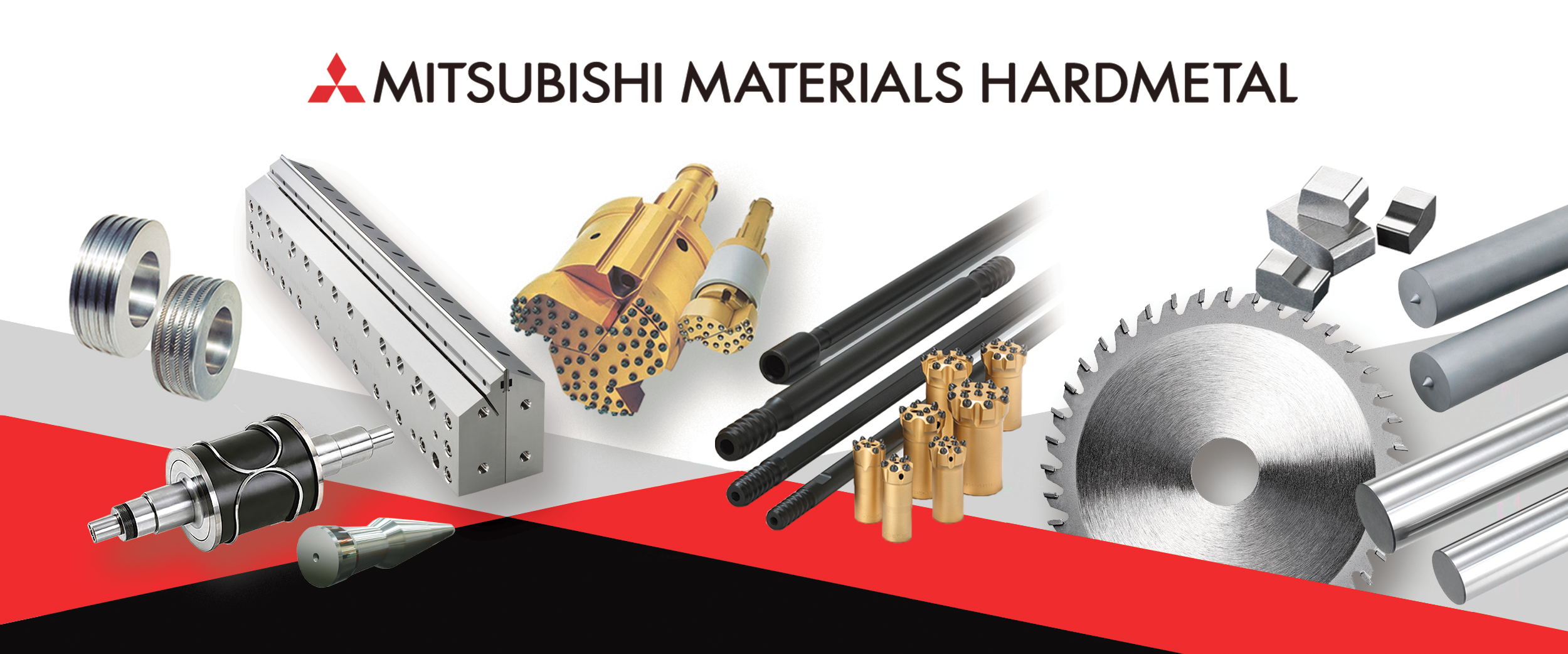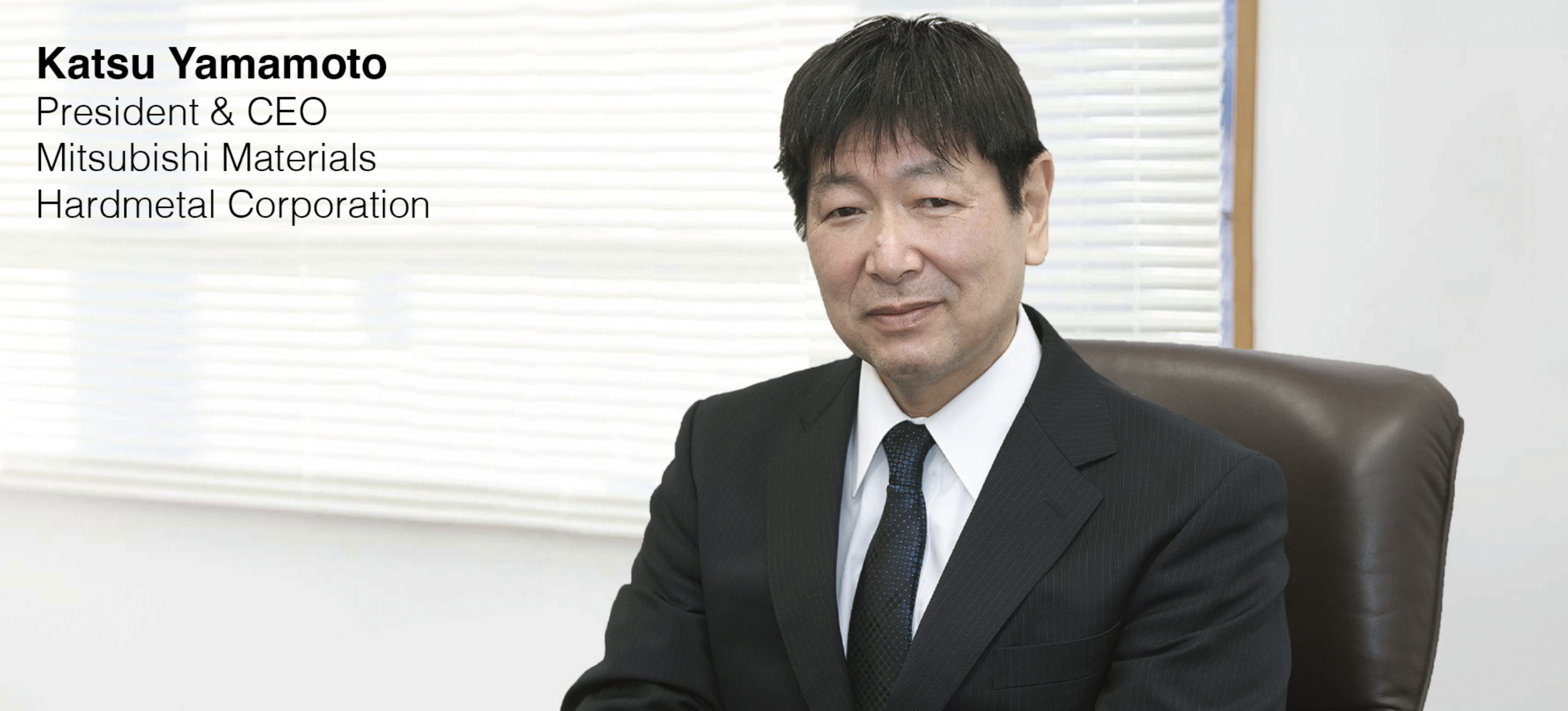
For many years, Mitsubishi Materials Corporation has been a trusted partner to customers who demand the most reliable products. Within its many constituents, Mitsubishi Materials Hardmetal (MMH), formerly known as MMC Ryotec, has long provided customers with the highest quality cemented carbide tools, the go-to material for many of the world’s most demanding industries. Company President and CEO Katsu Yamamoto believes that “our mission is to become the main supplier of tools for key industries that underpin society.”
The company is divided into three key pillars, each tailored for different customers. First, MMH’s rock tools draw on experience cultivated in mining, quarrying and tunneling projects to meet customer needs for efficient excavation.
Second, the company’s wear-resistant tools leverage advanced precision processing to contribute to the technology sector. In particular, slot dies are indispensable for the production of LCD panels, films, lithium-ion batteries, as well as newly developed perovskite solar cells—all of which require precision at the micrometer scale or less.
Finally, MMH’s carbide blanks contribute to various industries, utilizing world-class development capabilities and manufacturing know-how in cemented carbide materials.
Moving forward, the company is entering a bold new chapter. “A restructured organization now seamlessly integrates manufacturing and sales, supporting a portfolio where 60% of our business comes from global markets. To advance globalization further, it is essential to expand production capacity and strengthen our technical services and proposal capabilities for customers,” explained Yamamoto.
Specifically for rock tools, Japan is positioned as MMH’s command center for manufacturing, development and technology, serving as a hub for technical services and solution proposals. Meanwhile, their OTEC subsidiary in Thailand functions as a specialized manufacturing site for the company. While the manufacturing of rock tools in Thailand began in the 1990s, beginning in October 2025, OTEC’s new plant will boost production capacity and increase direct shipments from Thailand to customers worldwide.
In terms of sustainability, MMH is also setting the stage for strong gains in the future. Regarding tungsten, an essential raw material for cemented carbide tool production, its scarcity has made a stable supply an industry-wide challenge. To address this, the Mitsubishi Materials Group has set a target of raising its tungsten recycling rate from the current 58% to 80% by 2030. “We are actively working to collect and reuse tungsten used by our customers, strongly supporting the realization of a circular economy in the tool industry, and contributing to Mitsubishi Materials’ corporate philosophy of ‘For People, Society and the Earth,’” said Yamamoto.